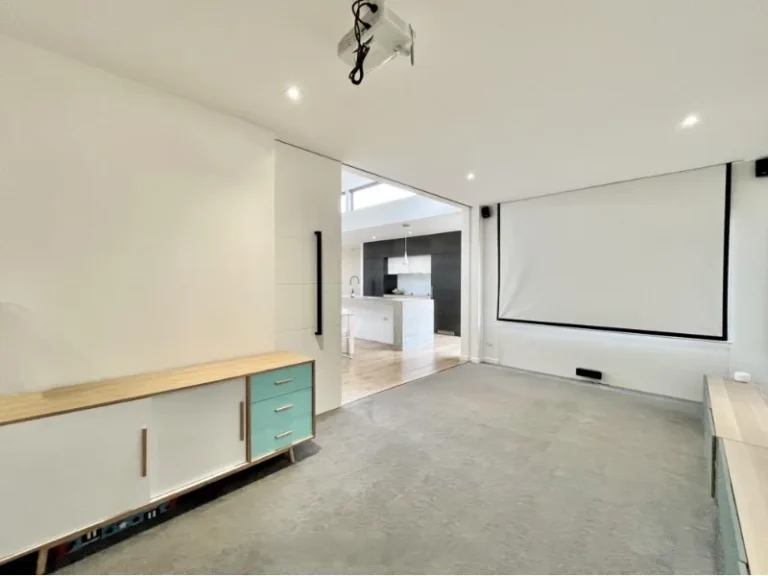
Helping you, or your loved one, access medium term accommodation through the NDIS.
If your current home is being modified with disability supports so you can live more comfortably, you might need a different place to stay for a while during this transition. Medium Term Accommodation (MTA) under the NDIS provides this as a temporary solution.
New Growth is here to guide you through the MTA process, helping to bridge the gap between your current situation and your long-term housing goals.
Medium Term Accommodation is a temporary housing solution designed to support NDIS participants who are in transition between living arrangements. It’s typically utilised when you have been discharged from hospital, or are awaiting completion of home modifications or the availability of a suitable long-term housing option. MTA includes any of the usual supports you have in your current NDIS plan.
Eligibility for MTA is determined based on your NDIS plan. You may be eligible if you are:
Currently transitioning out of a hospital and your permanent residence is not immediately available
Waiting for disability-related home modifications
Awaiting a vacancy in your preferred long-term housing solution
How New Growth can assist you with accessing MTA
Assessment and planning
We start by assessing your specific needs to ensure that MTA is the right fit for you.
Search and placement
Our team will assist you in finding and securing suitable medium term accommodation that aligns with your preferences and requirements.
Coordination of support
We facilitate the setup of necessary supports during your stay, providing continuity and stability.
Transition planning
New Growth will help prepare a seamless transition plan to move you from MTA to your long-term housing arrangement.
Are you exploring options for medium term accommodation? New Growth is here to support you every step of the way. It can be difficult to know where to start – moving is a stressful process, and finding a suitable place that fits you can feel overwhelming. We understand this, and we want to help make the process as easy for you as possible. Reach out to us to discuss your living circumstances, and we’ll help you find the best living option until your permanent home is ready.
If I could give more than 5 stars, I would! I can't express how grateful I am for Danielle and the entire team at New Growth. When I was newly diagnosed, I felt lost and overwhelmed, unsure of where to turn. Danielle was a beacon of hope during that uncertain time. She not only guided me through the complexities of accessing the NDIS but has continued to provide unwavering support ever since.
Not only has my journey with New Growth been life-changing for me, but it has also had a profound impact on my son, who is also part of the NDIS. Since we joined New Growth, he has found a renewed sense of purpose and a fresh outlook on life. It's been truly beautiful to witness his transformation.
Every support coordinator and support staff member I've encountered at New Growth has been nothing short of amazing. Their dedication, compassion, and expertise shine through in every interaction. They go above and beyond to ensure that we receive the best care and support possible.
I wholeheartedly recommend New Growth to anyone seeking disability support services. Their commitment to wanting to make a difference is truly incredible. I am so thankful to have found this incredible team, and I can't imagine navigating this journey without their guidance and support.
Thank you, New Growth, for making a real difference in mine and my sons life!! ❤️
Lauren Haimes
I never really leave a review but I couldnt be happier with the help I got from New Growth Group, they have changed my life. My mum is a chronically Ill woman. The help and support that new growth has given my mum, has allowed her to live a much more fulfilling life. It has also allowed me to go back to work and not have to live a life completely revolved around her.
After years of trying to gain access to the NDIS, the staff at New Growth have made it so easy, and the support all the staff have giving us is amazing. They really are an amazing group of people. We couldn’t be happier.
Josh Simon
As a spinal cord patient leaving hospital for the first time in months and facing the world with a permanent disability was very scary and challenging.
Transitioning back into the community was always going to be difficult, but the team at New Growth Care Group have been so amazing and I am so lucky to have them by my side. Its been a blessing to have Danielle and her team with me on this journey. Their communication and follow up's to any question or requests are prompt and resolved almost immediately. The understanding of my needs and situation always makes me feel special.
These are just lovely people who love what they do and I would recommend them 100%.
Ross Levestam
Danielle and her team have made a genuine difference to the life of Lachlan, the young adult with ASD whom I support and, in turn, to mine.
It was only after engaging New Growth Care that I could finally appreciate how poorly we had been serviced by our 2 previous support coordinators in-terms of generating positive outcomes for Lachlan and his NDIS goals.
From taking time to understand his needs, several meetings to get to know him and actively working with me to navigate the NDIA, I cannot recommend Danielle and her team enough.
Within 12 months we have gone from having very little in the way of support to having a coordinated support team of 6 that meet on a monthly basis to ensure that Lachlan is constantly moving forward to achieving his goals.
One of the things that stands out about New Growth is the genuine care and affection they have for Lachlan and the positive impact this has had on him personally as, for the first time, he feels that he is being listened to and his opinion valued.
Previous coordinators never bothered to do this and I am sad to say, I felt like he was treated like a commodity and NDIS money wasted in the name of billable hours.
I literally believe we won the lottery having Danielle and New Growth on Team Lachlan.
Understanding Specialist Disability Accommodation Eligibility Navigating the complexities of Specialist Disability Accommodation (SDA) eligibility is crucial for individuals and families within the National Disability Insurance Scheme (NDIS). At New Growth Care Group, we are committed to making this process straightforward and ensuring that each participant receives personalised support suited to their specific needs. In this…
Knowing the Roles of Support Coordinators Navigating the role of a support coordinator is essential for individuals and families using the National Disability Insurance Scheme (NDIS) in Australia. At New Growth Care Group, we are dedicated to offering clear guidance about support coordinator roles to ensure participants receive the personalised assistance they require. In this…
Importance of Supported Independent Living (SIL) Understanding Supported Independent Living (SIL) is important for those seeking autonomy within disability support. At New Growth Care Group, we're here to explain SIL simply, ensuring clarity for all. In this guide, we'll explore what SIL is, why it matters, and how it can help individuals lead fulfilling lives.…
What is specialist disability accommodation (SDA)? Specialist Disability Accommodation (SDA) refers to housing designed specifically for people with significant physical or intellectual disabilities. Typically, SDA housing support is tailored to meet the needs of its residents. This could include providing features like wider doorways, specialised layouts for mobility, and reinforced walls for the attachment of…
The National Disability Insurance Scheme (NDIS) in Australia incorporates a wide range of different support options to help participants live more independently. A support coordinator plays a key component in assisting participants in managing their care and accessing services. What is a Support Coordinator's Role in the NDIS? A support coordinator is a professional role…
The processes and rules of disability support can be challenging. That's where a support coordinator steps in, serving as a guiding light for National Disability Insurance Scheme (NDIS) participants and their families. At New Growth, we view each NDIS journey through a unique lens, prioritising a heartfelt and personalised approach. Founded on a deep dissatisfaction…